
21-Day Tanzania and Kenya Great Wildebeest Migration Camping Safari
Introduction: Experience the Great Wildebeest Migration on a Tanzania and Kenya Camping Safari
A Tanzania and Kenya Great Wildebeest Migration camping safari is an exciting way to explore East Africa’s extraordinary wildlife landscapes while experiencing the adventure of sleeping close to nature. Over 21 days, travellers can follow the migration across Tanzania’s Serengeti ecosystem and Kenya’s Maasai Mara, combining spectacular wildlife encounters with nights under canvas in some of Africa’s most remarkable wilderness destinations.
The Great Wildebeest Migration is one of the world’s most impressive natural wildlife events. More than a million wildebeest, accompanied by large numbers of zebras and gazelles, move through the Serengeti-Mara ecosystem in search of fresh grazing and water. Their seasonal movement attracts lions, leopards, cheetahs, hyenas and crocodiles, creating extraordinary opportunities for wildlife viewing and photography.
Camping makes this journey especially memorable. Instead of staying exclusively in hotels and conventional lodges, visitors spend nights at designated campsites and selected tented camps, surrounded by the natural sounds of the African wilderness. Depending on the destination and accommodation arrangement, travellers may sleep in dome tents, rooftop tents or comfortable furnished safari tents.
The safari begins in northern Tanzania, exploring Tarangire National Park, the Ngorongoro Conservation Area and the Serengeti. It then continues towards Kenya’s Maasai Mara, where visitors can experience another important stage of the migration before exploring additional destinations such as Lake Nakuru and Amboseli.
Whether you are an adventurous couple, a family, a group of friends or a wildlife photographer, this East Africa camping safari offers a rewarding combination of wildlife, landscapes, outdoor adventure and cultural experiences.
Why Choose a Camping Safari in Tanzania and Kenya?
Camping is one of the most immersive ways to experience Tanzania and Kenya. It allows travellers to enjoy the wilderness atmosphere while keeping the safari experience adventurous and, depending on the campsite and service level, more affordable than staying in luxury lodges.
A camping safari also offers flexibility. The itinerary can be adapted to follow the seasonal movement of the wildebeest, allowing travellers to spend more time in the Serengeti or Maasai Mara when the herds are concentrated in those areas.
1. Experience the African Wilderness
Camping places visitors closer to nature. At designated campsites, the sounds of birds, insects and other wildlife create a memorable atmosphere after a day of game drives.
In some areas, wildlife may move through the wider surroundings of a campsite. Travellers should always follow campsite rules, remain inside designated areas and listen to their guide or camp staff.
2. Explore More Safari Destinations
A three-week camping adventure provides enough time to explore several national parks and wildlife reserves in both countries.
In Tanzania, travellers can visit Tarangire, Ngorongoro and different sections of the Serengeti. In Kenya, the journey can continue into the Maasai Mara, Lake Nakuru and Amboseli.
3. Enjoy a Flexible Migration Experience
The Great Migration follows rainfall and grazing conditions rather than a fixed timetable. A camping safari can be designed around the expected movement of the herds, with accommodation selected close to the most promising wildlife-viewing areas.
Mobile tented camps can be particularly useful for migration-focused itineraries because some operators position them seasonally in different parts of the ecosystem.
4. Choose Between Budget and Comfort Camping
Camping does not always mean basic accommodation. Travellers can choose from simple public campsites, special campsites, private campsites and furnished tented camps.
Depending on the operator, a camping safari may include sleeping tents, mattresses, bedding, dining tents, camp furniture, a cook and prepared meals.
Understanding the Great Wildebeest Migration
The Great Wildebeest Migration takes place across the Serengeti-Mara ecosystem, which extends from northern Tanzania into southwestern Kenya.
The migration is a continuous seasonal movement of wildebeest, zebras and gazelles. Its timing and location depend on rainfall, grass growth and water availability.
The most important migration areas include southern Serengeti and Ndutu, the central Serengeti, the Western Corridor, the Northern Serengeti and Kenya’s Maasai Mara.
1. Ndutu and Southern Serengeti – Calving Season
The southern Serengeti and Ndutu region are famous for the wildebeest calving season, which generally takes place between January and March.
Large herds gather on the short-grass plains, where thousands of calves are born during the peak period. The concentration of newborn animals attracts predators, making this an exciting time for wildlife viewing.
Camping in the Ndutu area provides opportunities to explore the open plains and observe the migration during one of its most remarkable stages.
2. Central Serengeti – Wildlife and Migration Viewing
The central Serengeti, particularly the Seronera region, offers excellent year-round wildlife viewing.
Its open plains, river valleys and rocky kopjes support lions, leopards, cheetahs, elephants, giraffes and many other animals.
Depending on the season, migrating herds may pass through the central region as they move between the southern and western parts of the ecosystem.
3. Western Serengeti – Grumeti River
The Western Corridor is an important migration destination around May to July, although timing varies.
The migrating herds encounter the Grumeti River, where crocodiles inhabit some of the deeper pools. The river can create dramatic crossing opportunities, although crossings are unpredictable and cannot be guaranteed.
4. Northern Serengeti – Mara River
The Northern Serengeti is one of the most famous areas for witnessing the Great Migration, particularly between approximately July and October.
Large herds gather around the Mara River before moving between Tanzania and Kenya. The river is inhabited by crocodiles, and crossing attempts can create dramatic wildlife scenes.
Travellers should plan several nights in the northern Serengeti if river crossings are a priority. Even with a longer stay, no crossing can be guaranteed.
5. Maasai Mara – Migration in Kenya
Kenya’s Maasai Mara is an important part of the migration ecosystem.
When the herds move north from Tanzania, they spread across the Mara’s grasslands in search of fresh grazing. The reserve is also home to abundant resident wildlife, including lions, elephants, buffaloes, leopards and cheetahs.
The migration is commonly associated with the Maasai Mara between approximately July and October, although the exact timing changes each year.
21-Day Tanzania and Kenya Great Migration Camping Safari Itinerary
This suggested itinerary starts in Arusha, Tanzania, and finishes in Nairobi, Kenya. It combines northern Tanzania’s main safari destinations with the Serengeti migration areas and Kenya’s Maasai Mara.
The itinerary is designed for a guided camping safari, with designated campsites or selected tented camps. The migration areas and overnight stops should be adjusted to suit the travel season.
Days 1–2: Arrival in Arusha, Tanzania
Arrive at Kilimanjaro International Airport and transfer to your accommodation in Arusha.
Arusha is the main gateway to Tanzania’s northern safari circuit. It is an ideal place to meet your safari guide, receive a briefing and prepare camping equipment before the adventure begins.
Depending on your arrival time, you can explore the town, visit local markets or relax before the safari.
Activities:
- Airport pickup.
- Safari briefing.
- Camping equipment preparation.
- Optional Arusha town visit.
Overnight: Arusha.
Days 3–4: Tarangire National Park – Camping Among the Baobabs
Travel to Tarangire National Park, a beautiful wildlife destination famous for its ancient baobab trees and large elephant herds.
Enjoy game drives along the Tarangire River and across the park’s open plains. The river attracts wildlife, particularly during the dry season.
Look out for elephants, giraffes, zebras, buffaloes, wildebeest, antelopes and predators.
After the game drives, return to your designated campsite or selected tented camp.
Camping experience:
- Sleeping in safari tents or a suitable camping setup.
- Meals prepared by the safari cook, where included.
- Evening relaxation at the campsite.
- Enjoying the atmosphere of the African wilderness.
Overnight: Tarangire area.
Day 5: Ngorongoro Conservation Area – Scenic Highlands
Leave Tarangire and travel towards the Ngorongoro Conservation Area.
The route passes through scenic landscapes and highland communities. Depending on the selected itinerary, you may visit a Maasai community or stop at a crater viewpoint.
Continue to your campsite or lodge in the Ngorongoro or Karatu area.
Overnight: Ngorongoro or Karatu area.
Day 6: Ngorongoro Crater – Big Five Camping Safari
Descend into the Ngorongoro Crater for a full-day game drive.
The crater supports an impressive concentration of wildlife, including lions, elephants, buffaloes, zebras, wildebeest and endangered black rhinos.
Its varied habitats include grasslands, woodland, wetlands and a soda lake.
After the game drive, return to your accommodation or campsite.
Overnight: Ngorongoro or Karatu area.
Days 7–9: Serengeti National Park – Central Serengeti Camping
Travel into Serengeti National Park and explore its extraordinary plains.
The central Serengeti is famous for its resident wildlife populations and offers excellent opportunities to see lions, leopards, cheetahs, elephants and other animals.
Depending on the season, you may also encounter migrating wildebeest and zebras passing through the region.
Enjoy morning and afternoon game drives, returning to your campsite after each day’s adventure.
Activities:
- Serengeti wildlife game drives.
- Big Five viewing opportunities.
- Wildebeest and zebra sightings.
- Predator tracking.
- Wildlife photography.
Overnight: Central Serengeti campsite or selected tented camp.
Days 10–12: Northern Serengeti – Camping Near the Mara River
Travel towards the Northern Serengeti during the migration season when the herds are expected in this region.
This area is especially popular for observing wildebeest gathering around the Mara River.
Spend several days exploring the plains and river areas in search of the migrating herds, crocodiles and predators.
The timing of river crossings is unpredictable. Remaining in the area for several nights provides more opportunities to observe the herds, but does not guarantee a crossing.
During other months, these days should be spent in the part of the Serengeti where the migration is most active.
Activities:
- Migration-focused game drives.
- Mara River exploration.
- Crocodile and predator viewing.
- Wildlife photography.
- Optional hot-air balloon safari, subject to availability.
Overnight: Northern Serengeti campsite or seasonal tented camp.
Day 13: Travel to Kenya and Transfer to the Maasai Mara
After breakfast and a final game drive, begin the journey towards Kenya.
The cross-border route and transport arrangements should be confirmed before departure. Some safari operators require a vehicle change at the border, while others may arrange authorised cross-border vehicles.
Continue towards the Maasai Mara and settle into your campsite or tented camp.
Overnight: Maasai Mara area.
Days 14–16: Maasai Mara – Camping in Kenya’s Wildlife Paradise
Spend three days exploring Kenya’s famous Maasai Mara National Reserve.
The reserve offers excellent wildlife viewing, with large populations of lions, elephants, buffaloes, leopards, cheetahs, giraffes and other animals.
During the migration season, the Mara is a particularly exciting destination for following the wildebeest herds and observing possible Mara River crossings.
Return to your campsite or tented camp after each game drive and enjoy evenings in the African wilderness.
Activities:
- Great Migration game drives.
- Mara River exploration.
- Big Five wildlife viewing.
- Predator photography.
- Optional hot-air balloon safari.
- Optional Maasai cultural experience.
Overnight: Maasai Mara campsite or selected tented camp.
Day 17: Lake Nakuru National Park – Rift Valley Camping
Leave the Maasai Mara and travel towards Lake Nakuru National Park.
The park is famous for its rhinos, Rothschild’s giraffes, birdlife and scenic lake environment.
Enjoy an afternoon game drive if arrival time permits, then settle into your accommodation.
Overnight: Lake Nakuru area.
Day 18: Lake Nakuru – Rhinos and Birdwatching
Explore Lake Nakuru National Park with morning and afternoon wildlife viewing.
Look for black and white rhinos, Rothschild’s giraffes, buffaloes, zebras and various antelope species.
The park is also an important birdwatching destination, with numerous waterbirds and other bird species.
Overnight: Lake Nakuru area.
Days 19–20: Amboseli National Park – Camping with Views of Kilimanjaro
Travel to Amboseli National Park in southern Kenya.
Amboseli is famous for its large elephant herds and spectacular views of Mount Kilimanjaro.
Enjoy game drives across open grasslands and seasonal wetlands, observing elephants, lions, buffaloes, zebras and giraffes.
The park offers excellent photography opportunities, especially when elephants move across the plains with Kilimanjaro in the background.
Activities:
- Morning and afternoon game drives.
- Elephant photography.
- Birdwatching.
- Mount Kilimanjaro viewpoints.
- Camping in the Amboseli area.
Overnight: Amboseli area.
Day 21: Return to Nairobi and Departure
After breakfast, leave Amboseli and travel towards Nairobi.
Depending on your international flight schedule, you can enjoy a short city visit or proceed directly to Jomo Kenyatta International Airport.
Your 21-day Tanzania and Kenya camping safari concludes with unforgettable memories of the Great Wildebeest Migration, African predators, elephant herds, beautiful landscapes and nights spent in the wilderness.
Best Time for a Tanzania and Kenya Great Migration Camping Safari
The best time depends on the migration stage you want to experience.
| Period | Recommended destination | Main experience |
|---|---|---|
| January–March | Ndutu and Southern Serengeti | Calving season and predator activity |
| April–May | Southern and Central Serengeti | Herd movement and green-season landscapes |
| May–July | Western Serengeti | Grumeti region and possible river crossings |
| July–October | Northern Serengeti and Maasai Mara | Mara River crossing opportunities |
| November–December | Eastern and Southern Serengeti | Herds gradually returning south |
These are general seasonal patterns. Rainfall and grazing conditions influence the herds’ movements, so exact locations and crossing dates vary.
For travellers hoping to experience the migration in both countries, July to October is a popular period. However, the itinerary should be planned around the expected location of the herds rather than assuming they will be in a particular place on a fixed date.
Types of Camping Accommodation in Tanzania and Kenya
A Tanzania and Kenya camping safari can be arranged with different accommodation styles depending on the traveller’s budget and preferred level of comfort.
1. Public Campsites
Public campsites are designated camping areas managed by the relevant park or conservation authority.
They usually provide basic facilities such as shared toilets and washing facilities. The exact facilities vary between locations.
Travellers should expect a simple outdoor experience and should bring or arrange suitable camping equipment through their safari operator.
2. Special Campsites
Special campsites provide a more exclusive camping experience in designated wilderness locations.
They are often suitable for travellers seeking privacy and a quieter atmosphere. Facilities may be limited, so camping equipment, water, meals and support arrangements need to be planned carefully.
Availability and booking conditions vary by park and campsite.
3. Mobile Tented Camps
Mobile tented camps are particularly attractive for migration-focused safaris.
Some camps move seasonally to position themselves closer to the expected movement of the herds. They may provide furnished sleeping tents, private or shared bathroom facilities, dining tents and camp staff.
They combine the atmosphere of wilderness camping with more comfort than basic public campsites.
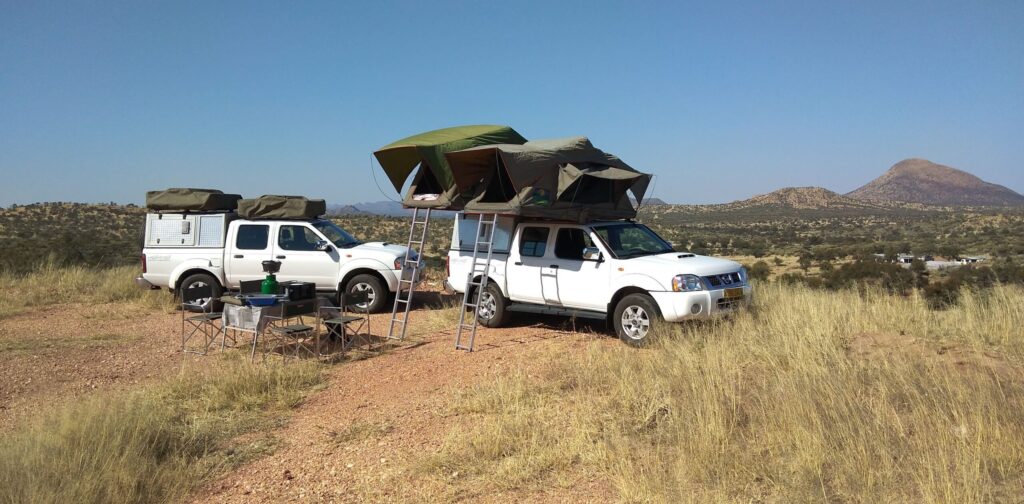
4. Rooftop Tent Camping
A rooftop tent safari is another option for travellers who prefer independent travel.
A suitable 4×4 vehicle can be equipped with one or two rooftop tents, mattresses, bedding, cooking equipment, a fridge and other camping accessories.
This arrangement is popular with self-drive travellers, couples and small groups who want more flexibility.
However, park regulations, campsite availability, vehicle requirements and border permissions must be confirmed before travelling between Tanzania and Kenya.
Camping Equipment Included in a Guided Safari
A guided camping safari generally includes the essential equipment needed for comfortable nights in designated campsites.
Depending on the operator and package, equipment may include:
- Sleeping tents.
- Comfortable sleeping mattresses.
- Sleeping bags and pillows.
- Camping tables and chairs.
- Dining tent where required.
- Cooking equipment.
- Kitchen utensils and cutlery.
- Water containers.
- Lighting equipment.
- Camping stove and cooking fuel.
- Food and drinking water.
- Camping support equipment.
Some operators provide a safari cook who prepares meals throughout the journey. Others offer a simpler camping arrangement with different meal and equipment arrangements.
Always confirm the equipment list before booking, particularly if you require a family tent, private bathroom facilities or specific sleeping arrangements.
Guided Camping Safari vs Self-Drive Camping Safari
Travellers can experience Tanzania and Kenya through either a guided camping safari or a self-drive camping adventure.
| Feature | Guided camping safari | Self-drive camping safari |
|---|---|---|
| Transport | Safari 4×4 with professional guide | Equipped 4×4 rental |
| Wildlife guiding | Included | Independent unless separately arranged |
| Meals | Often prepared by safari cook | Self-catering or arranged meals |
| Camping equipment | Usually supplied | Supplied with the rental or brought by traveller |
| Route planning | Managed by operator | Planned by traveller |
| Flexibility | Based on private safari itinerary | Greater independent flexibility |
| Cross-border arrangements | Organised by safari operator | Requires advance rental and border approval |
A guided safari is a practical choice for visitors who want a fully organised wildlife experience.
A self-drive safari suits experienced travellers who are comfortable with independent navigation, camping, vehicle preparation and safari regulations.
For a cross-border self-drive trip, travellers must confirm that the rental company permits the vehicle to enter both countries and that all necessary insurance and customs documents are available.
How Much Does a Tanzania and Kenya Camping Safari Cost?
The cost of a 21-day camping safari depends on the group size, season, accommodation arrangements, park fees, vehicle type and level of service.
The main costs include:
- Private 4×4 safari vehicle.
- Professional driver-guide.
- Tanzania park and conservation fees.
- Kenya park and reserve fees.
- Campsite and tented camp charges.
- Meals and drinking water.
- Camping equipment.
- Safari cook, where included.
- Cross-border transport arrangements.
- Airport transfers.
- Optional activities such as hot-air balloon safaris.
Camping can be more economical than staying in luxury lodges, but it does not eliminate park fees, conservation charges or transport costs. The Serengeti and Maasai Mara can be expensive safari destinations, particularly during peak migration months.
A personalised quotation should specify exactly which campsite fees, meals, equipment, park fees and cross-border arrangements are included.
What to Pack for a Tanzania and Kenya Camping Safari
Packing appropriately is important for a comfortable camping experience.
Recommended items include:
- Lightweight safari clothing.
- Neutral-coloured shirts and trousers.
- Warm fleece or jacket for cold mornings and evenings.
- Comfortable walking shoes.
- Sandals or camp footwear.
- Waterproof jacket.
- Sun hat and sunglasses.
- Sunscreen.
- Insect repellent.
- Personal toiletries and towel.
- Headlamp or torch.
- Binoculars.
- Camera and spare batteries.
- Power bank.
- Reusable water bottle.
- Personal medication.
- Small daypack.
If travelling during the rainy season, waterproof bags and protective covers for electronic equipment are especially useful.
Important Tips for Planning a Cross-Border Camping Safari
A Tanzania and Kenya camping safari requires careful preparation because the two countries have different park regulations, vehicle requirements and border procedures.
Before departure, consider the following:
Vehicle authorisation: If using a rental vehicle, obtain written permission for travel between Tanzania and Kenya. Not every rental company permits cross-border travel.
Insurance and customs: Confirm the required insurance, vehicle documentation and temporary import arrangements for both countries.
Park regulations: Check the camping rules and availability of designated campsites in each destination.
Camping equipment: Confirm that the vehicle or safari operator provides all necessary equipment, including tents, mattresses, bedding, cooking supplies and recovery equipment where applicable.
Border arrangements: Confirm the correct border crossing, opening hours, passenger immigration requirements and vehicle procedures.
Migration timing: Choose the route according to the expected movement of the herds. Avoid planning the entire trip around a guaranteed river crossing.
Advance reservations: Book campsites and accommodation early, particularly in the Northern Serengeti and Maasai Mara during the migration season.
Frequently Asked Questions About Tanzania and Kenya Camping Safaris
1. Can I follow the Great Wildebeest Migration on a camping safari?
Yes. A camping safari can follow the migration through the Serengeti in Tanzania and the Maasai Mara in Kenya. The route should be adjusted according to seasonal herd movements.
2. Is camping allowed in the Serengeti?
Yes. Camping is permitted at designated campsites, subject to park regulations, availability and the relevant booking arrangements. Special campsites and seasonal tented camps may also be available.
3. Can I camp inside the Maasai Mara?
Camping options are available in and around the Maasai Mara, but the specific campsite must be confirmed according to reserve regulations, location and availability. Private conservancies and camps outside the main reserve may have different rules and facilities.
4. Can I use a rooftop tent in Tanzania and Kenya?
Yes, where permitted by the relevant park and campsite regulations. A suitable 4×4 vehicle with rooftop tents can be used for a self-drive camping safari, provided the rental company authorises the cross-border journey.
5. Do I need a guide for a camping safari?
A guide is strongly recommended for a guided wildlife safari. Self-drive travellers can explore permitted areas independently, subject to park rules and driving regulations. Some activities and locations require authorised guides or other local support.
6. Is a camping safari suitable for families?
Yes. Families can enjoy a camping safari, provided the vehicle, tents, bedding, campsite facilities and daily driving distances are suitable for the children’s ages and needs.
Family tents and private bathroom arrangements can be requested when booking.
7. What is the best month for a camping safari in Tanzania and Kenya?
July to October is a popular period for following the migration in the Northern Serengeti and Maasai Mara. January to March is excellent for the calving season in Ndutu and the southern Serengeti.
8. Can I combine camping and lodge accommodation?
Yes. A mixed camping and lodge safari is a good option for travellers who want the adventure of sleeping outdoors while enjoying additional comfort during selected nights.
9. How many days are ideal for a Tanzania and Kenya camping safari?
Approximately 18 to 21 days is ideal for combining Tarangire, Ngorongoro, the Serengeti and Maasai Mara, with additional destinations such as Lake Nakuru and Amboseli.
10. Are meals included in a camping safari?
Many guided camping safaris include breakfast, lunch and dinner, often prepared by a safari cook. Self-drive packages may be self-catering or offer optional meal arrangements. Always confirm the meal plan before booking.
Book Your Tanzania and Kenya Great Wildebeest Migration Camping Safari
Experience the excitement of the Great Wildebeest Migration while enjoying the adventure of camping in some of East Africa’s most spectacular wildlife destinations.
From the elephant-rich landscapes of Tarangire and the wildlife-filled Ngorongoro Crater to the endless plains of the Serengeti and the famous Maasai Mara, this 21-day adventure offers an unforgettable combination of wildlife exploration and outdoor living.
Spend your nights in designated campsites, comfortable mobile tented camps or a fully equipped rooftop tent vehicle. Wake up to the sounds of the African wilderness and spend your days exploring the landscapes in search of migrating wildebeest, zebras, lions, elephants, leopards and other wildlife.
Whether you prefer a guided Tanzania and Kenya camping safari or an independent East Africa self-drive camping adventure, the itinerary can be customised to match your travel dates, group size, camping preferences and budget.
Contact our safari team today to plan your Tanzania and Kenya Great Wildebeest Migration camping safari.