
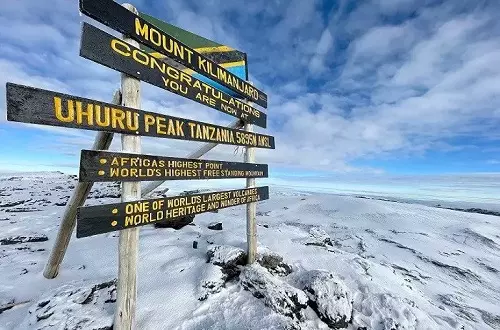
Kilimanjaro National Park
Kilimanjaro National Park is situated along the northern border of Tanzania adjacent to Kenya. It encompasses an area of 652 square miles (1,688 square kilometers), including the montane forest encircling Mount Kilimanjaro. Mount Kilimanjaro is among the 7 Natural Wonders of Africa and is designated as a UNESCO World Heritage site.
Kilimanjaro National Park encompasses Mount Kilimanjaro, the highest mountain in Africa and the tallest free-standing mountain globally. It attains a maximum elevation of 19,341 feet (5,895 m) at Uhuru Peak. Uhuru Peak constitutes a segment of the Kibo cone, one of the three volcanic cones located on the mountain.
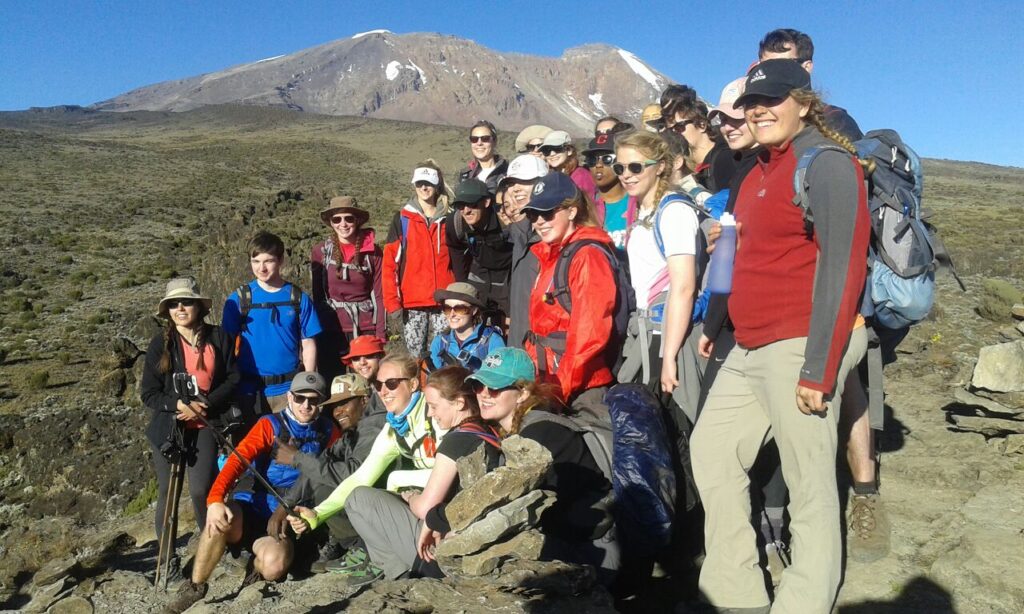
Mount Kilimanjaro and its adjacent national park are distinctive among national parks due to the representation of nearly all habitats from the base to the top. The summit features an arctic habitat, with a climb up the mountain guiding visitors through farmed land, rainforest, heath, moorland, and alpine desert.
Mount Kilimanjaro is the most accessible ascent among the Seven Summits, which comprises the highest peak from each of the seven continental areas. Consequently, Mount Kilimanjaro is the most commonly ascended mountain as well.
Seven distinct official ways ascend the mountain. The Marangu route, featuring communal sleeping huts, is regarded as the simplest and most prevalent option. Failure to acclimate to the altitude is the most common reason that people do not reach the summit. The youngest individual to ascend the peak was 7 years old, while the oldest was 89 years old.
This area lacks considerable wildlife; still, elephants, leopards, and buffalo can be observed in the montane forest. Such sightings are not to be expected during an ascent of Mount Kilimanjaro. A captivating wildlife observation is the western black-and-white colobus monkeys as they leap from tree to tree.
Mount Kilimanjaro is recognized as one of the Seven Natural Wonders of Africa and is endearingly referred to as the rooftop of Africa. The mountain features several summits, with Uhuru Peak being the apex. The mountain attained its status of marvel by being the highest peak in Africa and the tallest free-standing mountain globally.
The apex of Mount Kilimanjaro is 19,341 feet (5,895 m), referred to as Uhuru Peak, and constitutes a segment of the Mawenzi volcanic cone. Two other volcanic cones, Mawenzi at 16,893 feet (5,149 m) and Shira at 13,140 feet (4,005 m), exist. Kibo is inactive and may erupt in the future; conversely, Mawenzi and Shira are both extinct. Kibo is the largest of the three volcanic cones, extending over 15 miles (24 km).
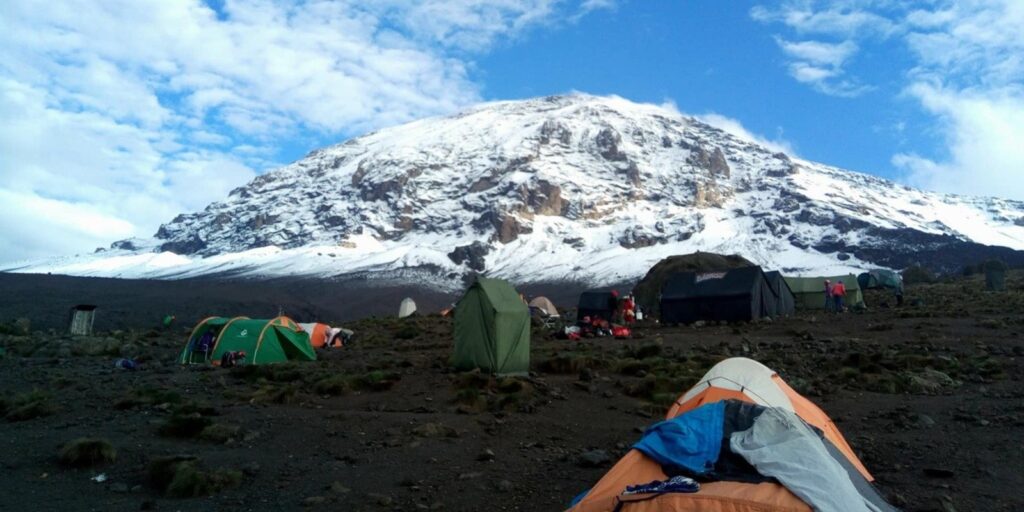
The ascent of Mount Kilimanjaro is a remarkable experience, even for climbers who do not attain the top due to altitude sickness or potential fatigue. Stunning vistas of the adjacent plains greet travelers en route to the mountain summit.
A journey to the peak enables a tourist to encounter nearly every sort of ecological system during a single expedition. Ecosystems encompass agricultural area, rainforest, heathland, moorland, alpine desert, and polar summits.
Activities and attractions in Kilimanjaro National Park
Kilimanjaro National Park is a UNESCO World Heritage Site and the location of Africa’s highest peak, the snow-capped equatorial Mount Kilimanjaro, which stands at 5,895 meters and is the tallest free-standing mountain globally. The mountain ascends from agricultural land to rainforest, with its slopes inhabited by buffaloes, leopards, monkeys, elephants, eland, and a plethora of birds of prey.
Renowned for its climbing and hiking opportunities, Mount Kilimanjaro National Park is situated in Northern Tanzania, adjacent to the Kenyan border, encompassing an area of 1,688 square kilometers (652 square miles) and is one of Tanzania’s most emblematic attractions for tourists. The distance is around 388 kilometers from Dodoma, the capital city of Tanzania. Our skilled team of professionals will guarantee that your visit to this World Heritage site is a unique experience. Below is a list of activities available to travelers in this region.
Materuni Waterfalls
Materuni Waterfall is a magnificent 90-meter waterfall located at the base of Mt. Kilimanjaro. A brief yet strenuous climb along a wooded trail leads you to the base of the waterfall, where the water accumulates in a pristine pool suitable for swimming. Throughout the hike to and from the destination, one traverses coffee and banana plantations, as well as streams and minor footbridges. Remain vigilant for monkeys, duikers, avifauna, and other diminutive fauna.
Shira Plateau
The Shira Plateau is situated a few kilometers west of Mount Kibo, along one of the ascent routes to Mount Kilimanjaro. This remarkable plateau is a caldera. As you traverse the plateau, you will tread across the remnants of a volcano that became extinct about 500,000 years ago. This location is cherished by nature enthusiasts for its exceptionally high biodiversity, particularly concerning fauna.
Chala Crater Lake
Chala Crater Lake is situated at the base of Kilimanjaro, straddling the boundary of Kenya and Tanzania, within a crater presumably created by volcanic activity associated with the mountain. Our proficient and informed tour guides will counsel you on the optimal season for travel, enabling you to witness the lake’s crystalline waters, which may exhibit hues of turquoise blue, midnight blue, or a striking green, contingent upon your chosen time of visit.
Olpopongi Masaai Village
At Olpopongi, travelers acquire profound cultural insights through one of the most genuine Maasai experiences in Africa. You will observe the Kraals inhabited by these early settlers for an extended period, while savoring exquisite local cuisine, Masai familial traditions and legacy, alongside a cordial team that distinguishes us from other operators. Olpopongi offers a distinctive opportunity to engage with true Masai culture while preserving the integrity of their everyday lives and private residences.
Kibo Peak
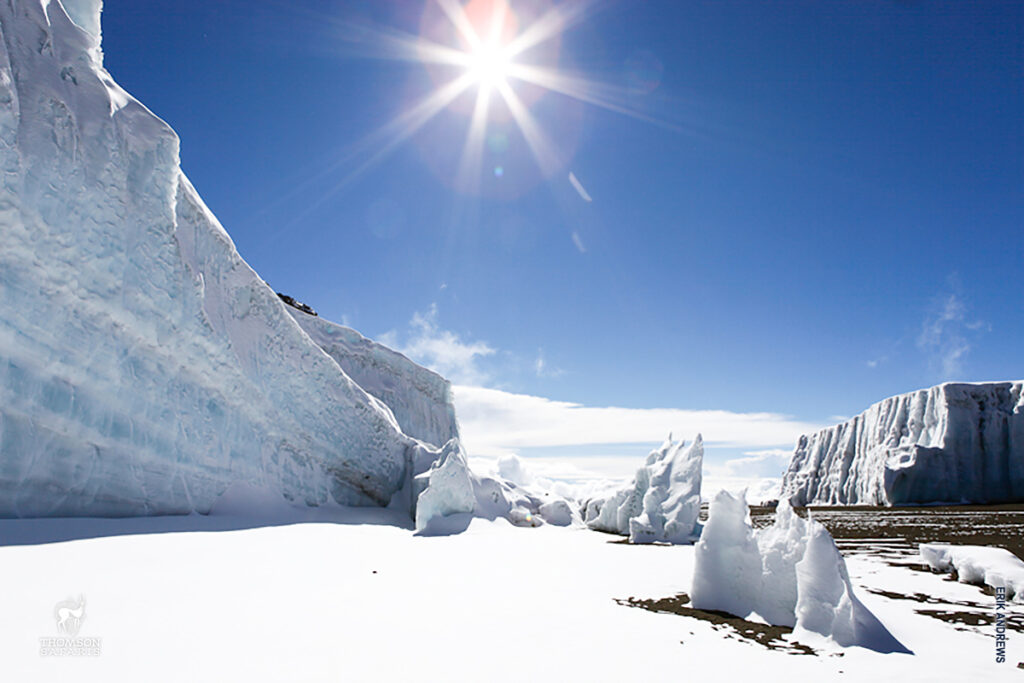
Kibo Peak is an exceptional destination that every traveler should endeavor to ascend to reach the summit of the planet. It is one of the three volcanoes of Mount Kilimanjaro and represents the highest point of both Mount Kilimanjaro and Africa. Exceptional vistas assured throughout the year. This is the sole summit that maintains its snow year-round. You will get extensive knowledge about this location from our tour guides, assuring you are in secure hands.
Kikuletwa Hot Springs
A visit to the Kikuletwa hot springs, situated in the Chemka hot spring campsite, is a renowned activity in the Kilimanjaro region. Swimming in this hot spring would undoubtedly be one of the finest experiences, as you immerse yourself in the warm water.
Rau Forest Reserve
This is a prominent ecotourism destination in the Kilimanjaro region, where one may engage in splendid nature walks and cycling through the forest while appreciating various cultural attractions that consistently captivate visitors.
Kilimanjaro Coffee Excursion
The lower slopes of Kilimanjaro constitute a productive agricultural region due to meltwater from its glacial peak. The coffee cultivators in this region are renowned for their 100% Arabica coffee, characterized by a fresh flavor and a silky texture. Excursions to coffee estates are a favored post-Kilimanjaro endeavor, since savoring a meticulously crafted cappuccino or Americano after a week of arduous trekking on the mountain is quite sublime.
Routes/Trails of Mount Kilimanjaro
This 4 km-wide caldera is a beautiful and lush oasis for wildlife. Often referred to as the ‘small Ngorongoro Crater’ because to its resemblances to the Ngorongoro Crater, this crater is distinct from its renowned sibling in that it is designated as a no-go zone. To safeguard the species, tourists are permitted solely to hike along the western and southern rims of the crater and observe the animals from above. Due to its relatively modest depth of about 100 meters, the view of the crater bottom and its numerous inhabitants represents an ideal ecological compromise.
Paths and Trails of Mount Kilimanjaro
Multiple pathways ascend to the peak of Mount Kilimanjaro.
The Southern Routes consist of Marangu, Machame, and Umbwe, which all ascend from the south.
The Lemosho, Shira, and Northern Circuit are the three routes that originate from the west.
The Northern Route, referred to as Rongai, is the sole ascent originating from the north.
The Marangu Route, sometimes referred known as the Coca Cola Route, is among the most popular paths for conventional tourists. It boasts a rather gentle incline and offers sleeping cottages en route. It is the most ancient and well-established route.
Lemosho Route
The Lemosho Route is frequently regarded as the most picturesque of all trekking paths on Mount Kilimanjaro. It shares part of the same road as the Machame route, however it possesses certain advantages that merit consideration, especially for travelers with more time.
The Lemosho Route commences at the Londorossi gate on the western slopes of Mount Kilimanjaro, traversing one of the more secluded areas of the mountain. It is among the most recent routes on the mountain.
The walk traverses a picturesque rainforest, offering hikers the opportunity to observe wildlife en route. Black and white colobus monkeys, blue monkeys, small lizards, and a diverse array of birds are frequently observed in the woodlands. The route traverses the Shira Plateau, moving from west to east across reasonably level and easily navigable terrain.
The initial stages of the Lemosho Route offer considerable tranquility, as this path experiences far less foot traffic compared to the Machame and Marangu routes. This enhances an already exceptional trekking experience, as at times it may seem as though you possess the entire mountain exclusively.
Ultimately, the Lemosho road converges with the Machame route, resulting in a surge in traffic. If you seek tranquility during the initial phase of the ascent, this is an excellent choice.
The Lemosho path shares much of the same scenery as the Machame route, including the Lava Tower and Barranco Wall. However, during the initial days, this trail provides distinctive vistas of the surrounding landscapes that are not seen from any other location on the mountain.
Travelers will have the opportunity to explore unspoiled rainforests and ascend to the Shira Plateau, where breathtaking views lie above the tree line.
The Lemosho path requires additional days for trekking due to its remote location and extended distance. The majority of individuals traverse this trail over a span of seven to eight days, resulting in a significant enhancement of the success rate.
If you aim to optimize your likelihood of summiting the mountain, this alternative is undoubtedly superior, especially compared to the Machame and Marangu routes. Notwithstanding its superior success rate, it is important to acknowledge that the Lemosho path presents a more arduous trek compared to the “Whiskey” and “Coca-Cola” ways.
Certain segments of the trail are steeper and more arduous, necessitating trekkers to spend an additional night or two in tents. The benefits of this route distinctly differentiate it from others, rendering it an increasingly favored option for intrepid travelers.
Northern Circuit Route
The Northern Circuit is the most recent way to ascend Mount Kilimanjaro and is arguably the superior option. This is due to the amalgamation of the finest aspects of the other trails, consolidated into a singular, exceptional hike. If you seek stunning landscapes, ample solitude, a rigorous challenge, and the opportunity to observe wildlife, this route is undoubtedly suitable for you.
The Northern Circuit route initially parallels the Lemosho route for several days, but diverges to utilize the less frequented northern routes instead of remaining on the southern flank of Kibo.
This route is largely unoccupied by fellow hikers, resulting in tranquil, serene, and nearly abandoned campsites.
The Northern Circuit route, being longer than the other trails, affords hikers the opportunity to experience more of the mountain. They get the opportunity to traverse the magnificent Shira Plateau while also observing Kibo Peak and Uhuru Summit en route.
It offers spectacular vistas of the expansive plains located to the north of the summit, a sight experienced by only a select few hikers ascending Kilimanjaro.
Marangu route
The Marangu Route is the oldest and most established trekking path on Mount Kilimanjaro, and it continues to be highly popular, despite the emergence of other alternative routes.
This route offers climbers the quintessential Kilimanjaro ascent, featuring expansive vistas and an exceptional trekking experience leading to the summit of Uhuru Peak. Nonetheless, it possesses distinctive features that differentiate it from other routes, imparting the Marangu route with a character and ambiance that is wholly unique.
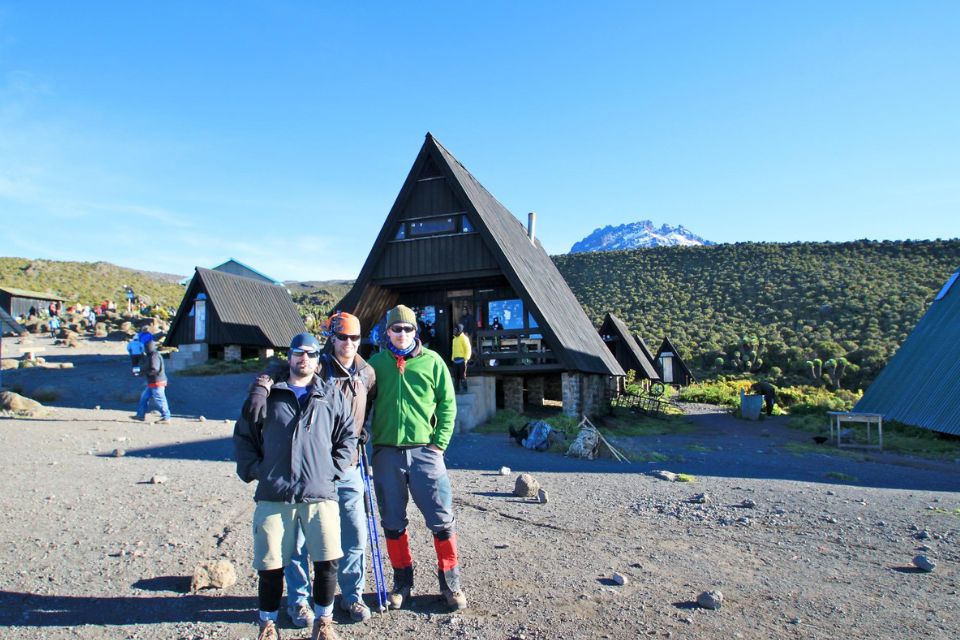
The Marangu Route is unique among the ascent paths of Mount Kilimanjaro as it prohibits camping; hence, trekkers reside in permanent huts rather than tents.
These dormitory-style shelters offer enhanced protection from wind and rain, rendering this route favored among tourists throughout the rainy season in April and May. Mandara and Kibo Huts each contain 60 bunk beds, while Horombo Hut has 120 bunk beds.
Trekkers will sleep in bunk beds furnished with a basic mattress and pillow while residing in those shelters. The Marangu road is frequently termed the “Coca-Cola Route” due to the availability of various candy bars, bottled water, and soft beverages for purchase.
The Marangu Route provides a gradual ascent to each daily campsite, earning it a reputation as a relatively easy walk. Do not underestimate this track, as the ascent to the final camp can be extremely arduous, involving approximately 1000 meters of vertical elevation on that day alone.
Summit day on Kilimanjaro presents a formidable challenge regardless of the chosen route, rendering the final ascent to the peak exceedingly gratifying.
The Marangu Route is favored by trekkers with time constraints, as it is one of the shortest ascents to Uhuru Peak, taking only five days. Adjust to the elevation. The Marangu route exhibits the highest failure rate among all routes ascending Mount Kilimanjaro. Consider this when selecting this option for your Kilimanjaro expedition.
The Marangu Route is the sole trail that follows the same trajectory for both ascent and descent. This indicates that although the trail is picturesque, hikers will encounter the same sights ascending as they do descending. Due to bidirectional traffic, Marangu can become excessively congested at times.
Nevertheless, for an authentic Kilimanjaro experience, it is challenging to surpass this established route to the Roof of Africa.
Umbwe Route
The Umbwe route is the quickest path to the Southern Glaciers and the Western Breach, and it is the most arduous and challenging route on Mount Kilimanjaro.
The Umbwe Route is the path for climbers seeking an authentic challenge. It is an infrequently traversed path that can be exceedingly challenging, yet also highly rewarding. This route is ideal for anyone seeking to challenge themselves on the slopes of Mount Kilimanjaro, away from the crowds prevalent on the more popular trails.
The Umbwe trail, albeit non-technical, presents steep ascents and necessitates trekkers to go over rocks and tree roots at various intervals. This is the most challenging and direct ascent of the mountain, incorporating multiple exposed ridges unsuitable for the faint-hearted. The endurance and physical condition of hikers may be challenged en route, making it most suitable for seasoned mountain trekkers seeking a rigorous experience.
The success rate of the Umbwe route is lower than that of several other routes because to its steep and direct ascent.
Trekkers are advised to be in optimal physical condition for this ascent, as the initial days consist of a continuous uphill trek, unlike other routes that have gradual ascents or undulating paths to facilitate acclimatization.
Nonetheless, the formidable effort of traversing the Umbwe Route is compensated by the breathtaking vistas. Occasionally, trekkers encounter breathtaking panoramas on both the left and right while ascending the trail.
The initial segment of this trail undoubtedly offers the most spectacular vistas of the mountain, second only to the summit itself.
Umbwe is also one of the most tranquil paths to ascend Mount Kilimanjaro. Due to its reputation as a challenging ascent, few individuals traverse this trail, resulting in its preservation and relative pristine condition.
This provides trekkers with the sensation of solitude on the mountain until the path converges with the Machame trail around Barranco Camp a few days into the climb. Subsequently, it adheres to the well-known Southern Circuit beneath the Southern Ice Field before ascending towards the summit from Barafu Camp. The descent, like most Kilimanjaro ascents, is conducted by the Mweka Route.
The Umbwe path offers unparalleled vistas and an opportunity for self-challenge in the wilderness while ascending Mount Kilimanjaro. This is the most authentic mountaineering adventure available on Kilimanjaro.
Machame Route
The Machame route is currently the most favored path to the summit of Mount Kilimanjaro, and justifiably so. This trek provides breathtaking vistas, a moderate effort, and ample opportunity for acclimatization, rendering it an excellent option for individuals with additional time in their itinerary.
The Machame path is colloquially known as the “Whiskey Route” due to its reputation for being more challenging than the Marangu route, sometimes referred to as the “Coca-Cola” route. In contrast to that trail, camping is permitted on Machame, necessitating that trekkers sleep in tents throughout their ascent to the peak.
Trekkers traversing the Machame Route see several notable landmarks on Mount Kilimanjaro, including the renowned Lava Tower and Shira Plateau. The path traverses various valleys and hills, rendering the climb somewhat more arduous, although offering hikers some of the finest vistas on the mountain.
The Machame path is thus regarded as the most picturesque of all routes ascending Mount Kilimanjaro, offering distinct and diverse scenery to traverse daily. The trail commences on the southern slope of the mountain, traverses beneath the Southern Ice Field, and ascends towards the summit from Barafu Camp.
Rongai Route
The Rongai path ascends Mount Kilimanjaro from its northeastern flank, adjacent to the Tanzania-Kenya border. The Rongai path preserves an aura of untouched wildness.
The Rongai Way is the sole pathway that approaches Kilimanjaro from the northern direction. The Rongai path is undoubtedly one of the most secluded and untamed trails on the mountain. Nonetheless, this route provides hikers numerous advantages, rendering it an attractive choice for individuals seeking a distinctive experience on Africa’s highest peak.
The Rongai Route, because to its secluded characteristics, ranks as one of the least frequented trails on Mount Kilimanjaro. Individuals choose this route will enjoy tranquility for most of the journey, encountering minimal fellow climbers until they arrive at Kibo Camp, where the trail converges with the Marangu Route for the last ascent to the summit.
Prior to that occurrence, tourists frequently have the trail entirely to themselves for extended periods, making it an excellent option for anyone seeking isolation in a distinctive wilderness environment.
For those with additional days in their itinerary, the Machame route is a wonderful choice. An extra day or two of acclimatization significantly enhances the success rate, enabling trekkers on this route to summit more frequently, despite its greater difficulty compared to the Marangu route.
One of the most formidable tasks is the Barranco Wall, a sheer cliff face that appears daunting at initial approach. Barranco is not as intimidating or challenging as it initially seems; however, caution is necessary, and you may need to utilize your hands for additional support while navigating some areas. The ascent typically requires one to one and a half hours to finish, and the vista from the summit justifies the exertion.
The disadvantage of the Machame Route is its potential for congestion at certain times. The gorgeous nature and additional acclimatization days make it a favored option for Kilimanjaro trekkers, resulting in crowded trails and campsites, especially during peak season.
However, if you seek the quintessential Kilimanjaro experience, the Machame path is unparalleled.
Climbing Kilimanjaro presents the Machame route as either a seven-day or a six-day ascent. The six-day option merges days four and five, traveling directly from Barranco Camp to Barafu Camp, bypassing Karanga. You bypass Karanga Camp
Shira Trail
The Shira Route is a little used path that commences near Shira Ridge. It is virtually indistinguishable from the Lemosho path. Shira was the initial route, whereas Lemosho represents the enhanced variety. Despite Shira being a diverse and picturesque route, it is less advantageous than its successor because to the comparatively elevated beginning location of Shira, which is rapidly accessible by vehicle. Climbers may encounter altitude-related illnesses on the initial day when camping at 11,800 feet.
The route approaches Mount Kilimanjaro from the west, commencing with an extensive drive from Moshi to Shira Ridge. The car circumvents the rainforest area, and the hiking track commences on Shira Ridge. The Shira route traverses the Shira Plateau from west to east, offering a nice and somewhat level climb. The route proceeds beneath Kilimanjaro’s Southern Ice Field along the Southern Circuit before ascending from Barafu. The descent is conducted by the Mweka path.