
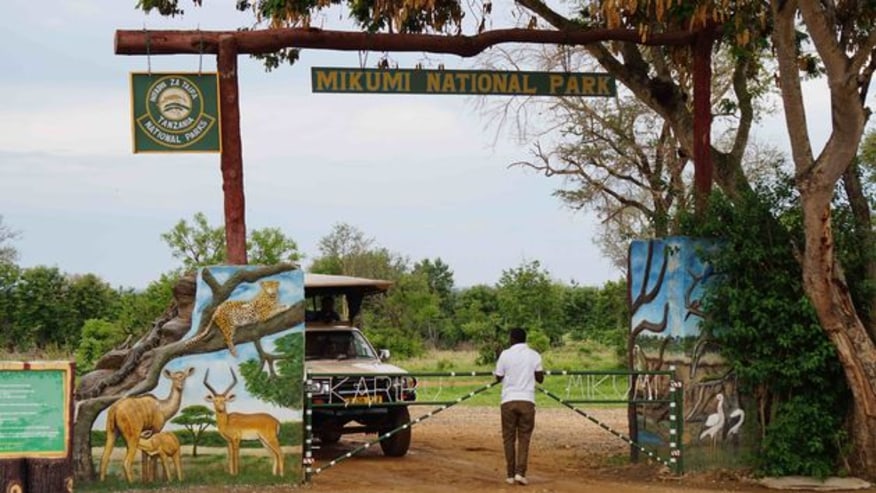
Mikumi National Park
The initial rays of the sun illuminate the light grass blades swaying across the plain in a tan hue. Numerous zebras can be observed, confident in their camouflage at this hour when predators are occupied, resembling ballerinas with their heads aligned and stripes mixing in motion.
Mikumi National Park is situated adjacent to the northern boundary of Africa’s largest wildlife reserve, the Selous, and is bisected by a well-paved road connecting Iringa and Dar es Salaam. This is consequently the most accessible portion of the 75,000 square kilometer (47,000 square mile) wilderness area that stretches eastward close to the Indian Ocean.
The abundance of wildlife and the expansive vistas of the Mkata Floodplain, the celebrated focal point of Mikumi, frequently evoke comparisons to the more illustrious Serengeti Plains.
Lions traverse their grassy domain as zebras, wildebeests, impalas, and buffaloes navigate the plains, transitioning from the flattened surfaces of termite mounds or, at times during the rains, descending from the trees. The giraffes inhabit the isolated acacia groves along the Mkata River, while the elephants in Mikumi are particularly fond of the islets.
The Mkata Floodplain, accessible via a well-connected network of game drive trucks, is arguably the most reliable location in Tanzania for observing the formidable eland, the largest antelope species globally. The remarkable larger kudu and sable antelope traverse the foothills of the miombo-covered mountains bordering the park.
Over 400 avian species have been documented here, including vibrant permanent species such as the yellow-throated longclaw and bateleur eagle, as well as the lilac-breasted roller, among numerous European migratory, particularly during the rainy season. Located about 5 kilometers north of the main entrance are two pools, renowned for their abundant population of hippos.
Size and location of Mikumi National Park
The national park encompasses an area of 3,230 square kilometers (1,250 square miles), making it the fourth largest game park in Tanzania, and it is part of the broader Selous Game Reserve ecosystem.
The park is situated 283 kilometers, or 175 miles, west of the capital city, Dar es Salaam, north of the expansive Selous, and in route to Katavi, Ruaha, and Udzungwa.
How to reach Mikumi National Park
A well-paved road connects Mikumi to the capital, Dar es Salaam, via Morogoro, requiring around four hours of travel.
Furthermore, a route links Selous, Udzungwa, and Ruaha, accessible solely during the dry season.
A charter flight is also available linking Dar es Salaam, Selous, or Arusha. Local buses from Dar es Salaam to the park headquarters, where all game drives are organized, are also accessible.
Activities in Mikumi National Park
Guided nature Walks
This activity is conducted via several walking trails and encompasses 3 to 4 circuits across the park. Three frequently utilized walking routes include Kikoboga, Vuma Hills, and the Mikumi Wildlife Resort trail.
Visitors may be escorted by a knowledgeable guide and an armed ranger for protection against hazardous wildlife. Your walking safari will provide opportunities for intimate interactions with wildlife and avian species. Optimal execution occurs throughout the arid season.
Bird watching
Mikumi is an exceptional birding destination, hosting over 400 documented bird species, including migratory, savanna, and aquatic birds, among others. Birdwatching is most effectively conducted during game drives and nature walks, with notable species including the open-billed stork, Zanzibar red bishop, purple-breasted roller, hornbills, Malachite kingfisher, bateleur eagle, martial eagle, and marabou stork. Numerous aquatic avians can be observed near the Hippo pool in the park. Migratory birds are observed from November to April.
Wildlife Watching
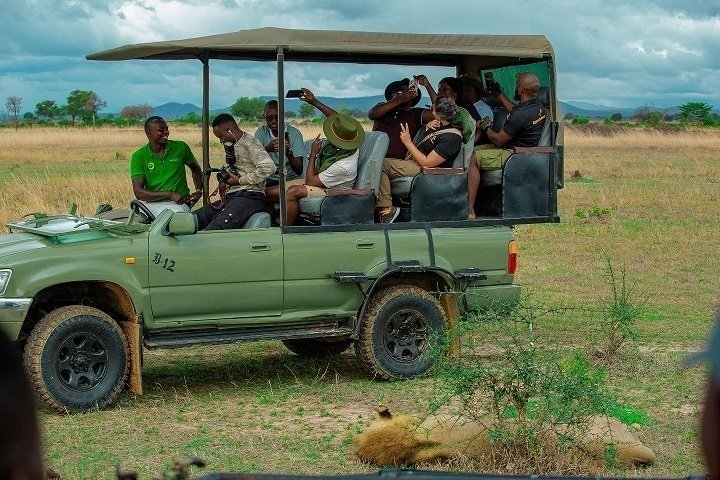
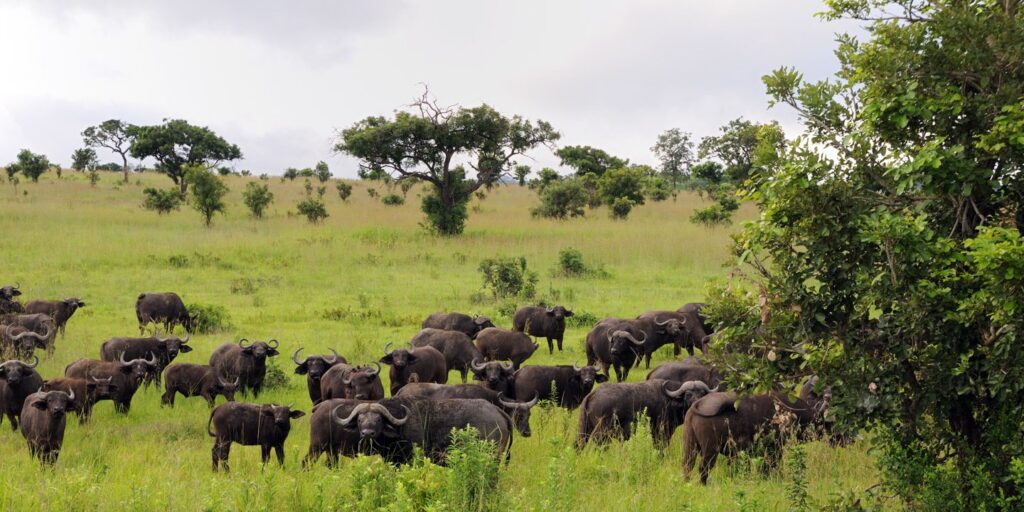
Wildlife observation is a prominent activity conducted in Mikumi National Park. You may participate in either daytime or nighttime game drives, the latter providing opportunities to observe nocturnal species. It is optimally conducted in 4×4 safari vehicles under the guidance of a knowledgeable safari guide familiar with the historical context. The Mkata floodplains are ideal for observing lions and elephants. This region also draws substantial populations of buffalo, elephants, zebras, wild dogs, waterbucks, wildebeest, hartebeest, sable antelopes, impalas, larger kudus, elands, warthogs, and yellow baboons.
Camping and Picnicking
Mikumi provides both comfortable camping and picnicking, enabling guests to engage with the natural environment. Camping occurs in the northern region and is highly sought after by nature enthusiasts. The park includes two camping sites: a public campsite and a private campsite. They possess fundamental amenities such as water, restrooms, bathing facilities, and a kitchen. A previous reservation is necessary for the private camping to prevent hassles.
The picnic places include Mwanambogo, Mbuyuni, and Millennium.
Visits to Cultural Institutions
The park is encircled by distinctive cultures, coordinated under Chilunga cultural tourism. Tourists have opportunities to engage in ethnic dances and sample traditional cuisine.