
Tarangire National Park | Tanzania Safari, Wildlife & Best Time to Visit
Tarangire National Park is one of the largest parks in Tanzania, with an area of 2,850 square kilometers (1,100 square miles). The landscape features extensive valleys, mountains, and wetlands. The flora comprises acacia forest, baobab trees, Combretum woods, and seasonally inundated grassland. The expansive grasslands and Baobab trees evoke a harsh, ‘Out of Africa’ ambiance that is notably unique among Tanzania’s national parks.
The park is a two-hour drive from Arusha, one and a half hours from Ngorongoro Crater, and four hours from Serengeti National Park. The park is situated near several locations, including Lake Manyara National Park. The name originates from the Tarangire River that flows through the park. Diverse wildlife species utilize the river as a principal water supply, particularly during the arid season.
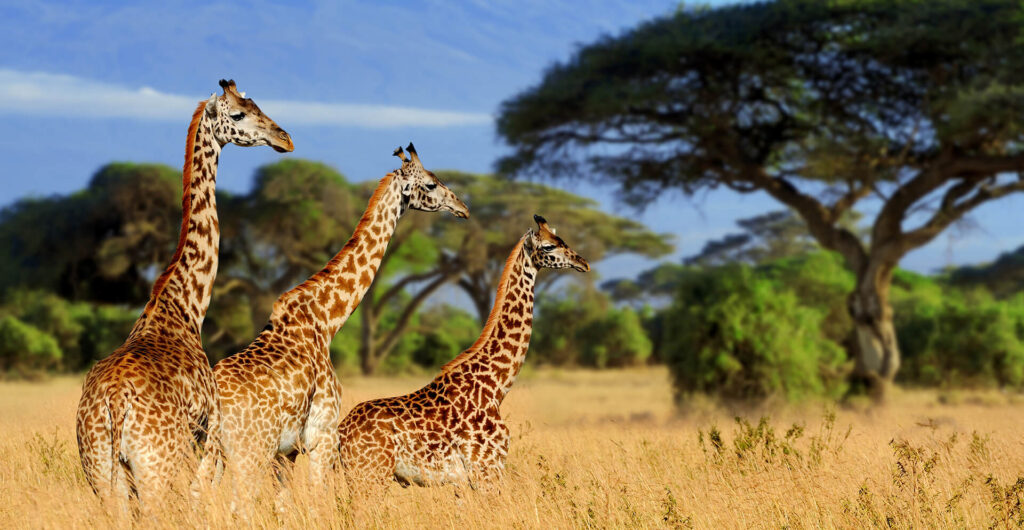
Tarangire boasts some of the largest elephant populations in Africa, with herds comprising up to 300 individuals. From July to October, approximately 5,000 of these elephants migrate to Tarangire. One cannot overlook the substantial populations of giraffes, elands, Coke’s hartebeests, greater and lesser kudu, Bohor reedbuck, buffaloes, Thompson’s gazelle, zebras, the rare gerenuk, fringe-eared oryx, and a limited number of black rhinos; leopards, lions, cheetahs, and hyenas are also prevalent. There are more than 545 avian species, including lovebirds and the reticent starlings, among others.
The Best Time for Visiting Tarangire National Park
The optimal period to visit Tarangire National Park is the dry season, spanning from June to October. The optimal months for animal observation occur due to migratory patterns, and the low grasses facilitate game watching.
The fauna congregate around the Tarangire River for hydration, facilitating straightforward observations.
To observe the large herds of elephants, one must visit the park during the latter part of the dry season (September/October).
November is often very economical, as it falls outside the peak season while being relatively arid before to the onset of the short rains. The low season, spanning from late November to May, is optimal for avian observation due to the region’s moist, verdant, and lush conditions.
Location of Tarangire National Park
Tarangire National Park is situated in Northern Tanzania, immediately south of Lake Manyara National Park and a brief drive from Arusha. Tarangire is a favored destination for travelers traversing the Northern Tanzanian safari circuit en route to Ngorongoro and the Serengeti due to its relative seclusion. The park is partitioned into two gem-regulated zones, allowing species to traverse freely between them.
The park is located between the Masai steppe grasslands to the southeast and the Great Rift Valley lakes to the north and west. The perennial River Tarangire is situated in the northern section of Tarangire, serving as the park’s vital resource, particularly during the arid season when the majority of the area is entirely desiccated.
Weather and Climate of Tarangire National Park
The climate in Tarangire National Park is agreeable and moderate. The “Long Rains” from March to May and the “Short Rains” from November to December are the sole two wet seasons. Precipitation typically occurs in the afternoon and infrequently at other times during the day. Temperatures never reach excessive heat; however, it can turn cool during the evenings and mornings. Warm clothing is recommended for morning game drives.
June, July, August, September, and October constitute the arid months. The afternoon temperature is 26°C (79°F). The days are lucid and the sky is serene. Nighttime temperatures decrease to approximately 14 degrees Celsius (57 degrees Fahrenheit).
Information regarding Tarangire National Park
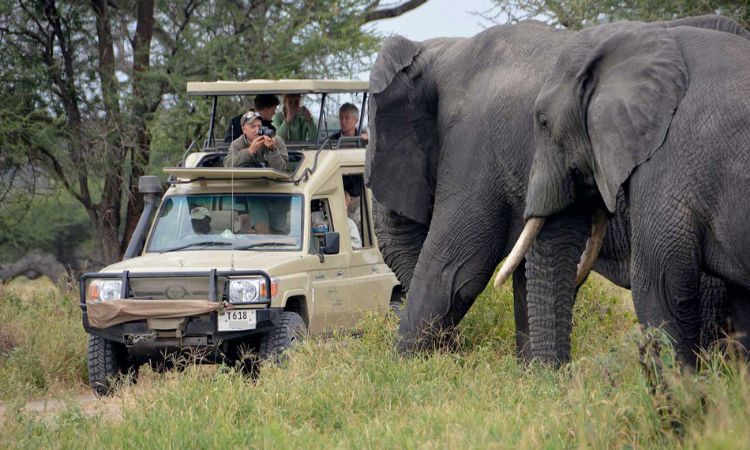
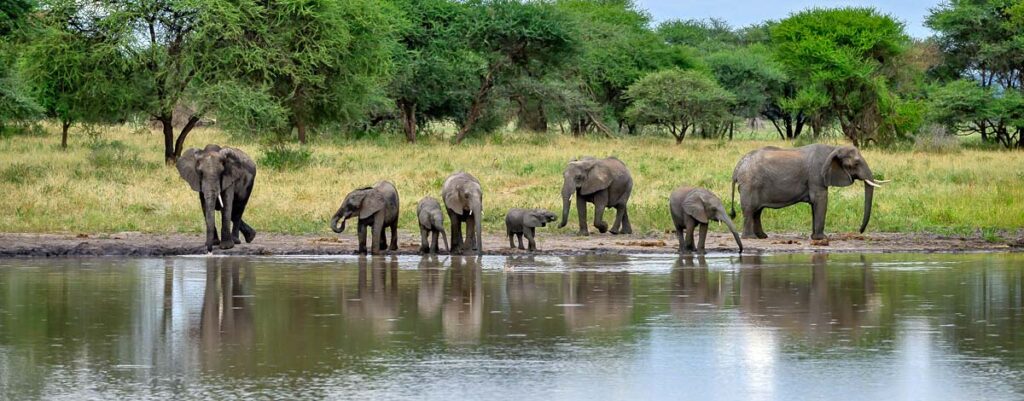
Tarangire possesses some of the largest elephant populations in the nation. From July to October, over 5,000 of these creatures come to Tarangire, with groups of up to 300 elephants occasionally visible simultaneously.
The expansive grasslands and Baobab trees evoke a harsh, ‘Out of Africa’ ambiance that is distinctly characteristic of Tanzania’s national parks.
The destination is a brief drive from Arusha via paved roads, facilitating a relatively effortless journey, ideal for a short safari lasting one or two days following a Kilimanjaro trek or other safaris in Tanzania.
Activities and attractions in Tarangire National Park
Night game drives
Are night game drives permitted in Tarangire? Night game drives are permitted in the park; however, not all lodgings provide these tours. Only entities that have adequately fulfilled all standards and rules set forth by TANAPA, such as Swala and Oliver’s camp, are permitted to undertake these campaigns.
Tarangire Balloon Safaris
Participate in a hot air balloon flight over Tarangire, where you will ascend above the treetops to gain a remarkable vantage point of wildlife, including lions, underneath you.
Bird watching
Birdwatching is a highly favored activity at Tarangire National Park, which hosts over 500 species of birds, appealing to numerous avian enthusiasts. The park has some dry-country avian species at the limits of their distribution, including the northern pied babbler and vulturine guinea fowl. When visiting Tarangire, it is advisable to choose the wet season, specifically from February to March, as this period is optimal for birdwatching. This will undoubtedly provide you with a fascinating experience of a lifetime.